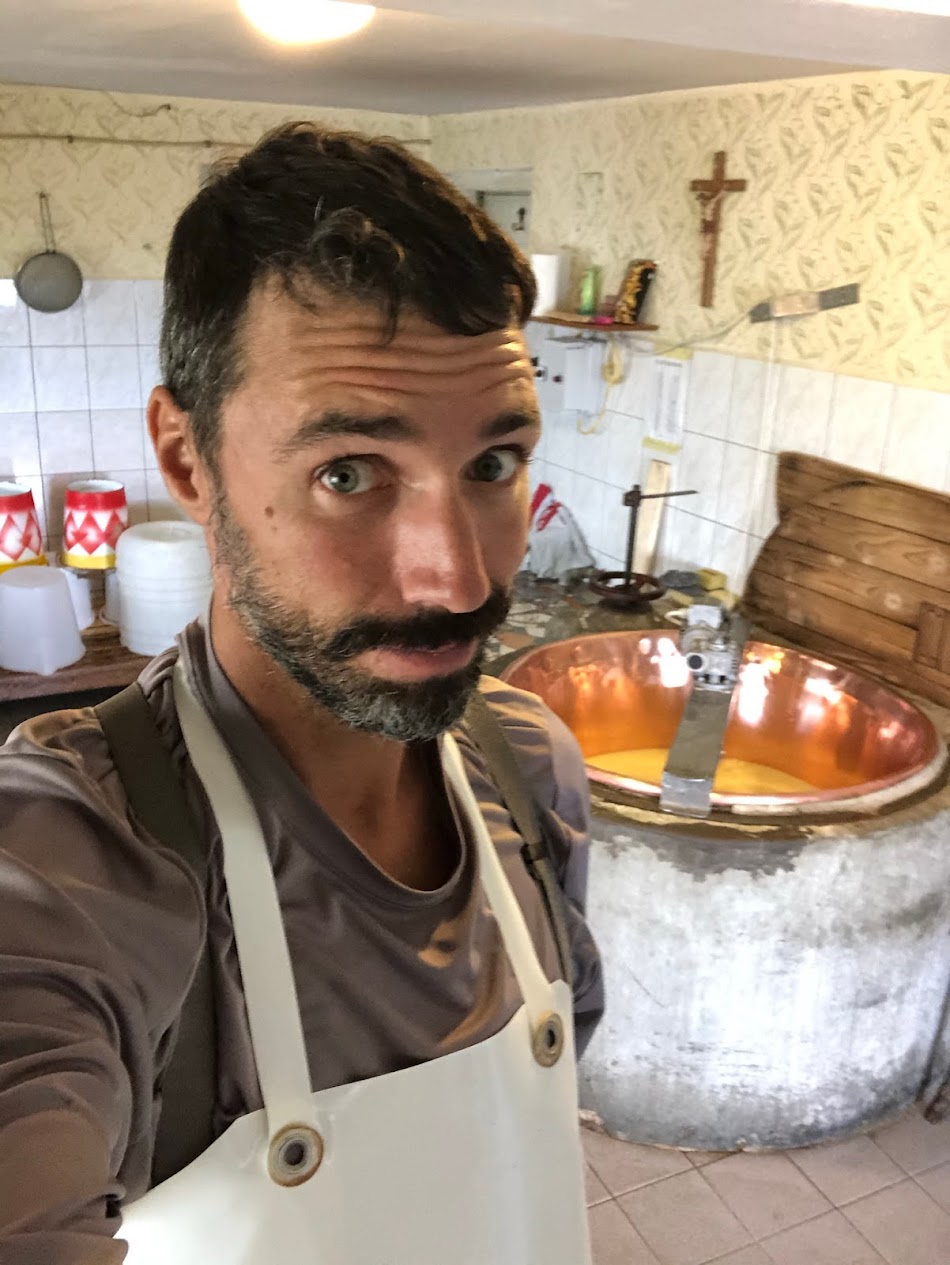
On September 13th I attended a workshop taught by Moshe Rosenburg in which we discussed how to respond to the imperfections that can commonly arise in cheesemaking. His is approach was very scientific, emphasizing the use of very accurate measurement of aciditiy and temperature and making minute adjustments, especially during the process of syneresis. Syneresis a stage in the cheesemaking process which begins after the cut when the curd begins to expel whey, and lasts until the cheese is brined. During the intervening steps of cooking draining hooping and pressing small variations can be used to adjust moisture content. Being able to take accurate measurements and control the rate of syneresis can help you address issues found in the final product and is the first step in creating a consistent cheese.

We also discussed the chemistry of flavor development. During aging, flavor development takes place through the metabolic activity of microorganisms and enzymes originating from the milk, rennet, starter, secondary microflora (yeasts, molds, bacterias), and non-starter lactic acid bacteria (NSLAB). There around 60 enzymes that occur naturally in milk and many survive the cheesemaking process. Most of the starter culture that is added dies off but in doing so releases enzymes. The flavor of a cheese can be explained by identifying flavor compounds that are released during aging mainly through two biochemical events: Lipolysis and Proteolysis.
Lipolysis is the catabolism (breakdown) of fat in milk by lipases. Lipases are enzymes that hydrolyze fat triglycerides, breaking them into fatty acids which can follow various pathways to create flavor compounds. For most cheeses, the creation of free fatty acids is as far as the process goes, but in cheeses with high levels of lipolysis (blues, some Italian cheeses) further breakdown occurs. Unsaturated fatty acids can undergo a secondary metabolism involving oxidation into aldehyes which flavor compounds. Hydroxy fatty acids can become lactones which are a specific type of ester found in low levels in cheddars and high levels in blues. Ketoacids can be oxidized into methyl ketones which are found extensively in blues as a result of lipolysis by P. roqueforti, a commonly used blue mold. Levels of lipolysis vary, raw milk cheese will have more potential because pasteurization kills lipoprotein lipase, which is indiginous to milk. The rennet paste used in some hard Italian cheeses contains pregastric esterase (PGE) which is a potent lipase. B.linens, the bacteria which characterizes washed rind cheeses, contains intracellular lipases and esterases which contribute to lipolysis.
Proteolysis is the breakdown of protein into peptides then amino acids and finally amino acid catabolites.
There are multiple sources of proteases (enzymes that breaks protein down into peptides, which are amino acid chains). Chymosin is an enzyme in rennet that is a principal protease in most cheeses. Plasmin is a component of blood that is also an indigenous milk protease. After these two have done the initial work of breaking protein into peptides further breakdown of peptides into amino acids takes place through the action of peptidases. Starter cultures contain intracellular peptidases which are released into cheese after they die. Thermophillic cultures die and lyse quickly, resulting in high levels of amino acids in cheese utilizing this type of culture. Cheeses which use secondary microflora as a primary ripening catalyst (washed, bloomies, blues) get most of their proteolytic activity from their respective microorganisms. The free amino acids that result from the preceding events are catabolized (broken down) into amino acid catabolites, many of which have been identified and linked to aromatic sensations, which is what we really care about in the end. Extent and source of Proteolysis is also a decisive factor in the texture of cheese, so understanding this process is a must.