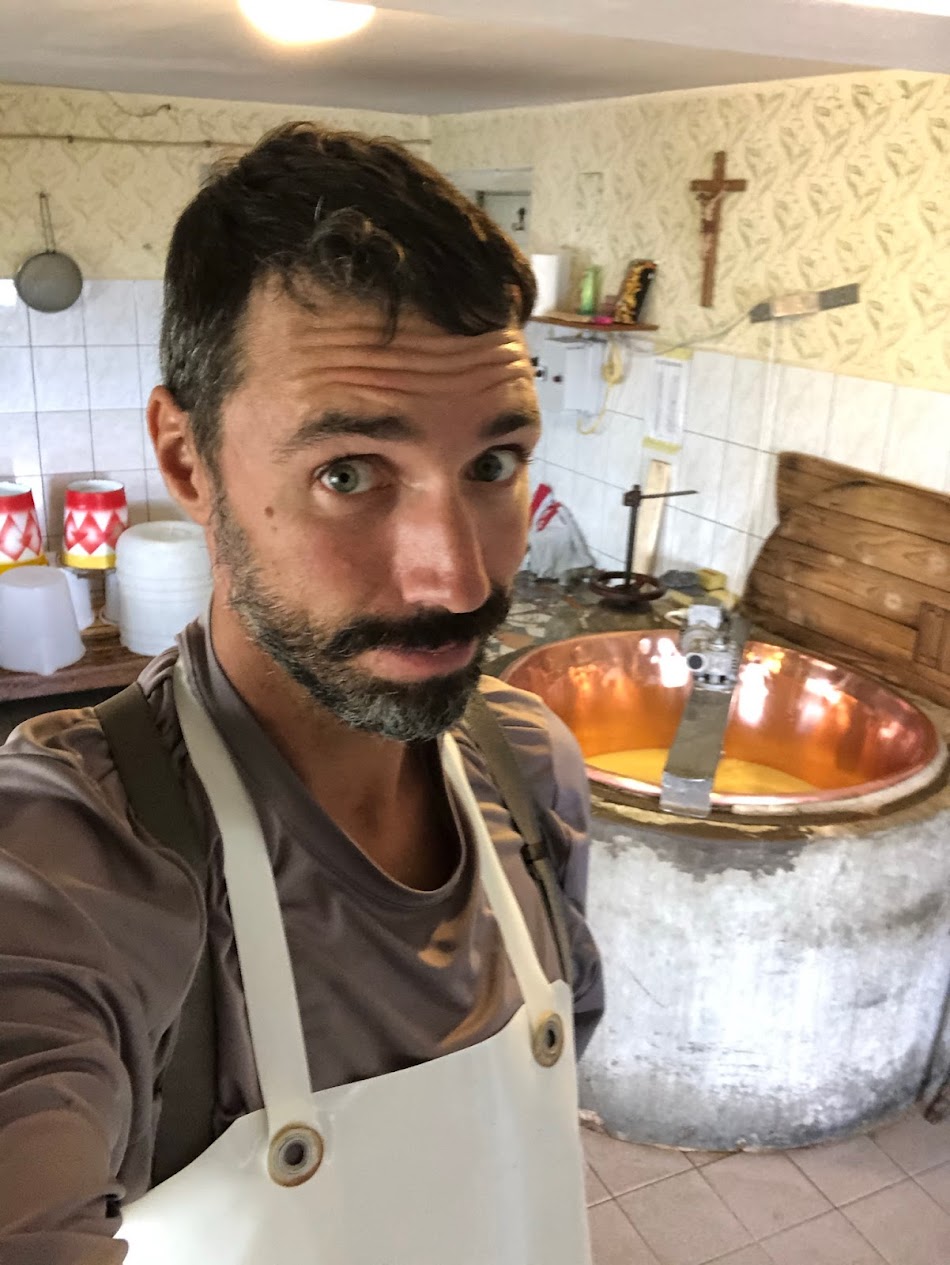
Who I am and what my mission is.

I spent ten years making cheese in the US before beginning to travel globally volunteering with cheesemakers and herders in 2019. I wish to document the intersection of traditional and modern techniques, and portray the global diversity of dairying, cheesemaking, and grazing practices. In doing this I want to show how the final cheese is the end product of a complex series of relationships and decisions made by humans, that are embedded in a a cultural, geographic, and climatic setting. I advocate for raw milk, a natural starter cultures, heritage breeds, regenerative or ecologically responsible grazing, and the right of all humans to ferment milk in their own homes, selling in local markets. In order to further my mission I am writing a book, and hope to build an online archive, a global database of cheese, dairy, and grazing knowledge. I would love to talk with anyone interested in hosting me anywhere in the world and hearing about how you do things.
Showing posts with label make. Show all posts

Thursday, December 22, 2011

Monarch - Beer washed Cows milk cheese

Monarch Wheel at 2 weeks

We have just released a pair of new cows milk cheese that I spent September and October working on.  The first is called Monarch and is a trappist style cheese which we are washing with a brown ale from Santa Cruz Mountain Brewery.  This style is a semi-hard washed curd cheese, meaning that we pull some of the whey out and add hot water during the cook, reducing the rate of acidification and creating a softer cheese, Monterey Jack has a typical washed curd texture.  These trappist cheeses originated in Bosnia but are made in Hungary and Germany as well, and the style we base Monarch on are those made in German Trapppist monasteries, which generally also make beer.  This subset of the Trappist family is typified by washing with beer, and the growth of a b. linens smear, lending a pungency and softening of the paste through proteolysis.

Five Weeks
 The milk for this cheese comes from the Schoch family, who have a ranch near by in Salinas.  They bring us the milk still warm from the morning milking, It dosn't get more fresh than that.  Monarch is made in wheels smaller than our sheeps milk cheeses, It will ripen after only 2-3 months that way.  It is also softer than our other cheeses, and is washed regularly with first a brine to stimulate the growth of B. Linens, then with beer to add a distinct flavor and keep molds off.

9 weeks, ready for sale

Tuesday, April 19, 2011

Moonflower Make, Thermophillic Culture


I got to make moonflower today which is a semi-hard cheese with a mild washed rind flavor. On this make we use a thermophillic culture which grows best at a temperature ranging from 95 to 113 and has a maximum of 140. This class of cultures is best for cooked pressed cheese because they are heat tolerant, but is also used in some soft cheeses to produce a substance called exopolysaccharide (EPS) which prevents the paste (interior) from becoming to runny. Thermophillic culture is also used in other dairy products such as yogurt and buttermilk.

So we add our culture at 95, wait half an hour, rennet, then wait 45 minutes as the cheese sets. After cutting we cook the cheese up to 102 over half an hour. This involves draining out the 125 degree water and adding 165, to slowly raise the temp while stirring. We then drain the water from the jacket and drain the whey from the vat. The curd is hooped into our Kadova molds and pressed for 4-5 hours or overnight. In the cave this cheese takes out its washed rind character from the Brevibacterium linens (b. linens) bacteria which grow on it forming a beautiful slimy orange blanket. Ill explain this in greater detail as I get into the nitty gritty of the aging room in a later entry. Suffice it to say this is an excellent cheese with a mild washed rind flavor with nutty nuances on top of that unique creamy sheep milk background.